The Carquinez Strait: Our Story of Place
The Carquinez Strait, the deep-water channel connecting the Sacramento River delta to the San Francisco Bay, is the geographical spine of our region.
For millennia, it was the land of the Karkin Ohlone people. In the modern era, this specific landscape became a primary crucible for California's industrial revolution and global agricultural dominance.
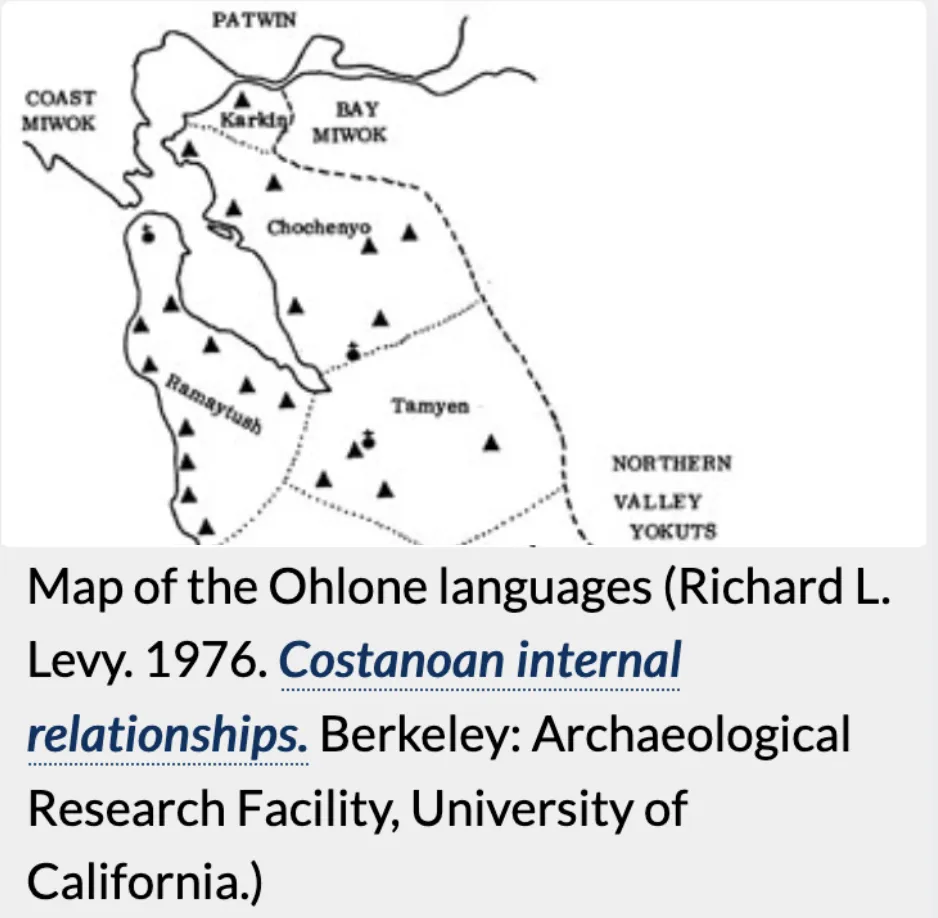
The "Story of Place" for Crockett, Port Costa, and Rodeo is defined by a central, ongoing paradox: It is a region built by global industry that simultaneously became one of California's primary "sacrifice zones" for environmental pollution.
Karkin Commons exists to change that narrative.
Historical Foundation: Powering California and Connecting the World
Our communities were essential to building the California of today. We were not merely passive bystanders; we were critical hubs connecting California’s interior to the global economy.
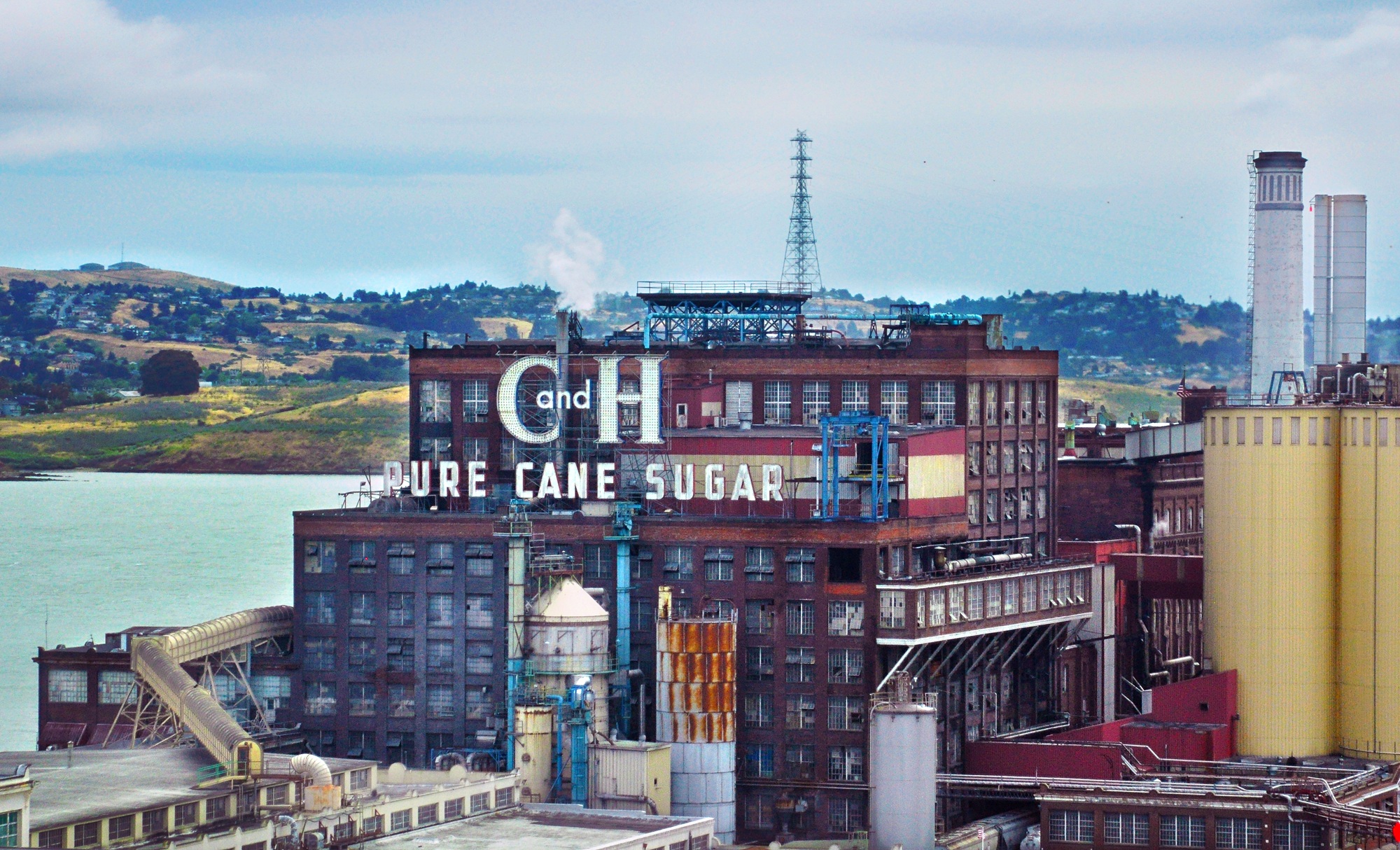
Crockett & The "Sugar" City: Founded as a wheat shipping point, Crockett was redefined in 1906 with the establishment of the California and Hawaiian Sugar Refining Company (C&H Sugar). It was a quintessential company town, creating an incredibly tight-knit community bound by common labor and shared identity. For a century, C&H Sugar processed raw sugar from Hawaii and distributed it across the Western United States, making Crockett a globally connected trading hub.
SFGate: Life in the slow lane / In I-80's shadow, Crockett has stayed small as the county grew up
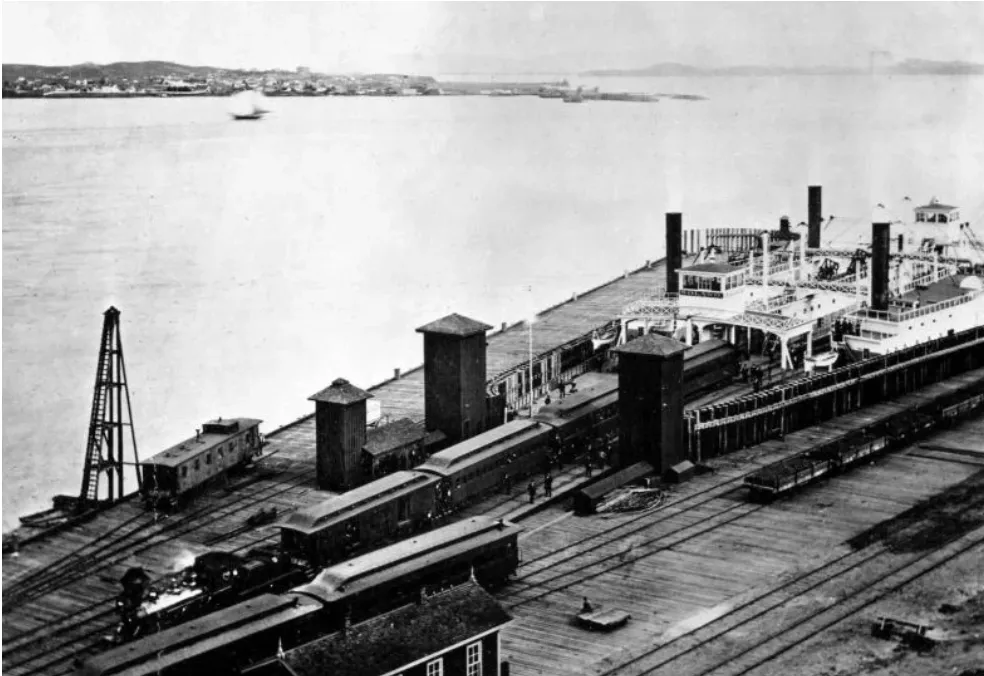
Port Costa: The Grain Capital: In the 1870s and 1880s, Port Costa was a global giant. Deep-water wharves extending over a mile along the Strait connected Central Valley wheat and agricultural products directly to European markets. Millions of bushels passed through here, making Port Costa a powerful artery for California's agrarian economy.
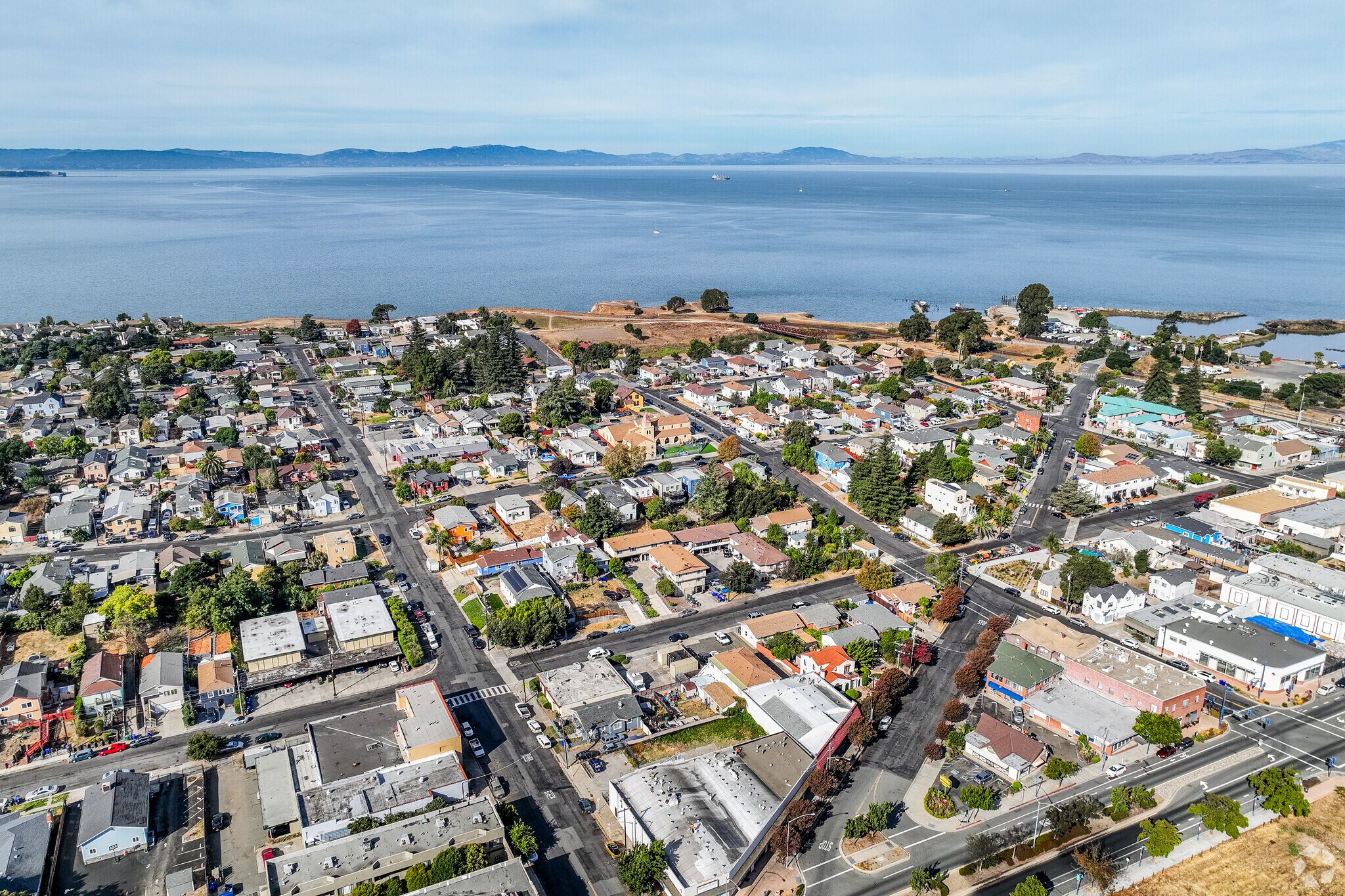
Rodeo’s Energy Nexus: Starting in 1896, what became the Phillips 66 (and now potential bio-refinery) facility was established. Rodeo became a critical anchor for the region’s emerging energy infrastructure, powering development, industry, and transportation throughout the Bay Area.
Phillips 66 progresses Rodeo Renewed refinery conversion project
Community Identity: The Strait as Neighbor and Connector
Despite the heavy industrial footprint, a rich community fabric flourished along the waterfront.
Working Class Strength: A powerful sense of solidarity arose among the refinery workers of Rodeo and the C&H staff in Crockett. Strong unions and cooperative relationships formed, defining the towns’ identities.
Contra Costa Historic Society
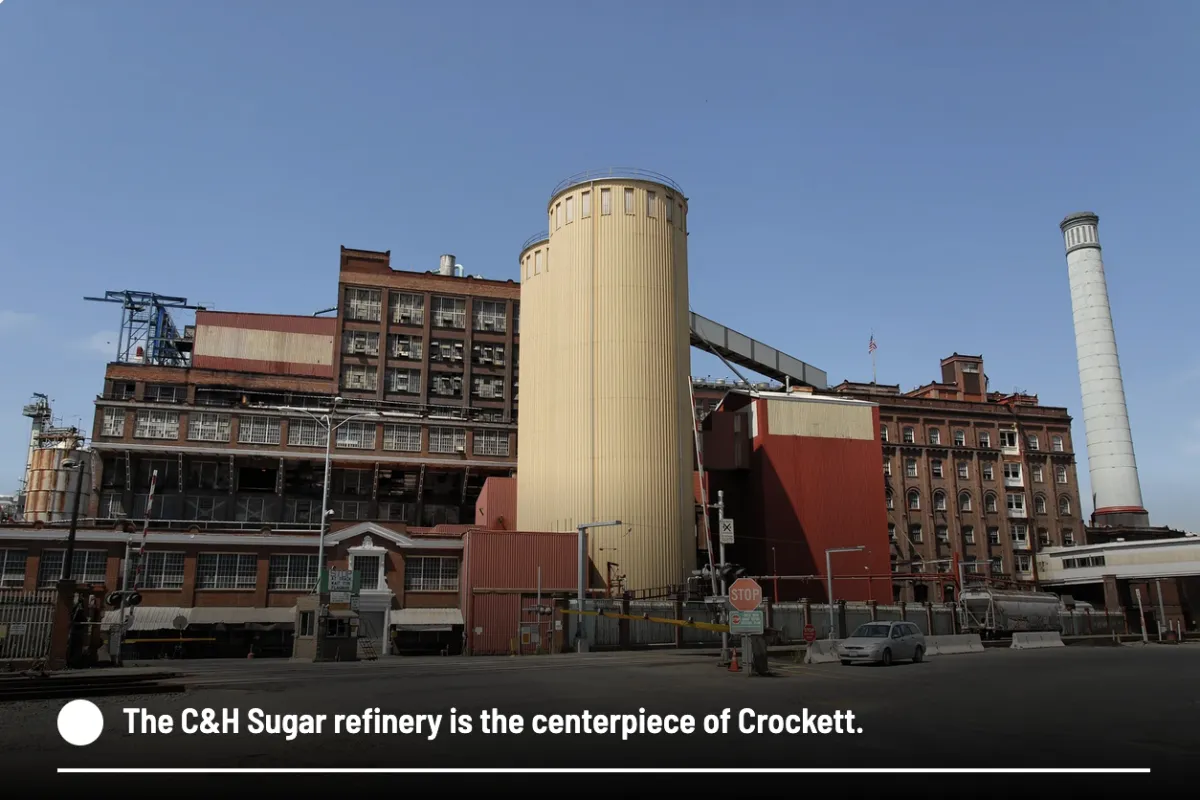
The "Town That Sugar Built": In Crockett especially, C&H provided not just jobs, but recreational facilities, parks, and cultural centers. The community spirit was fierce, characterized by resilience and mutual support.
California: The Story of Crockett, California's Unique Corporate Town
The Sacrifice Zone Paradox: The Cost of Global Industry
While the Strait connected us to the world and provided regional economic stability, our communities paid an immense ecological and public health price for over a century.
Refinery Pollution Events (Rodeo/Selby)
For generations, the energy facilities in Rodeo and surrounding areas (like the former Selby Smelter) released massive quantities of toxins into the air and water.
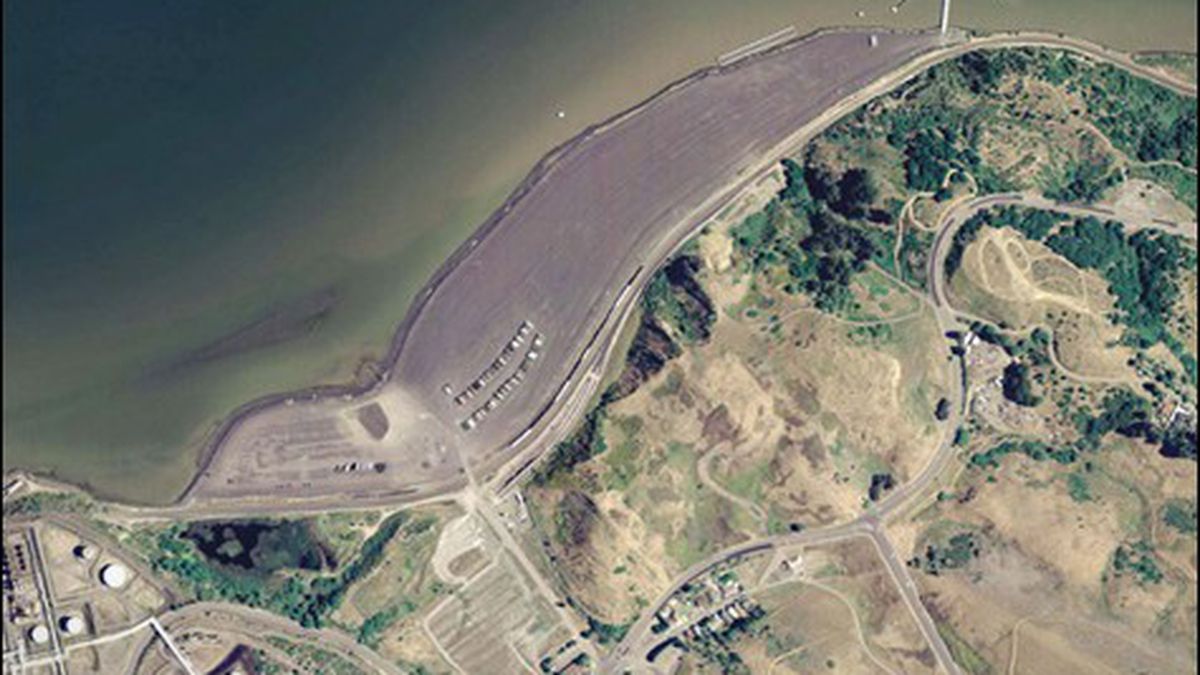
Historic Contamination: For over 100 years, the Selby Smelter deposited heavy metals—including lead and arsenic—into the surrounding soil and the Strait. Cleanup efforts are ongoing but often insufficient to address the deep legacy of contamination.
East Bay Express: Containing a Toxic Mess
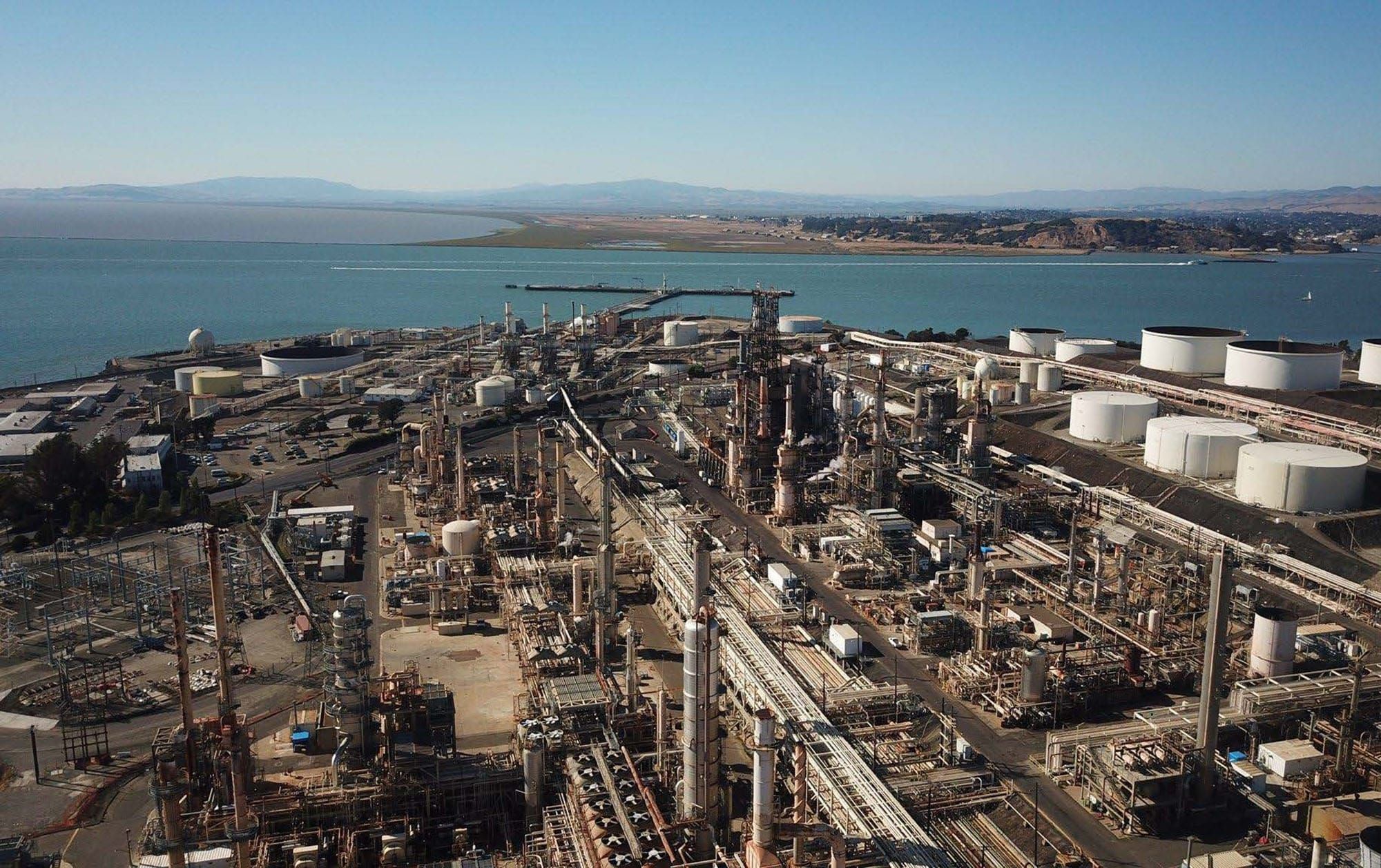
Chronic Flaring and Accidental Releases: Regular flaring and significant chemical release events are a constant reality, depositing sulfur dioxide and particulate matter directly into residential areas.
SF Gate: California fines 2 oil firms $11.5 million for waste violations
C&H Sugar Pollution and Incidents (Crockett)
While seen as a community partner, C&H Sugar has also been a major source of historical pollution and a site of corporate negligence.
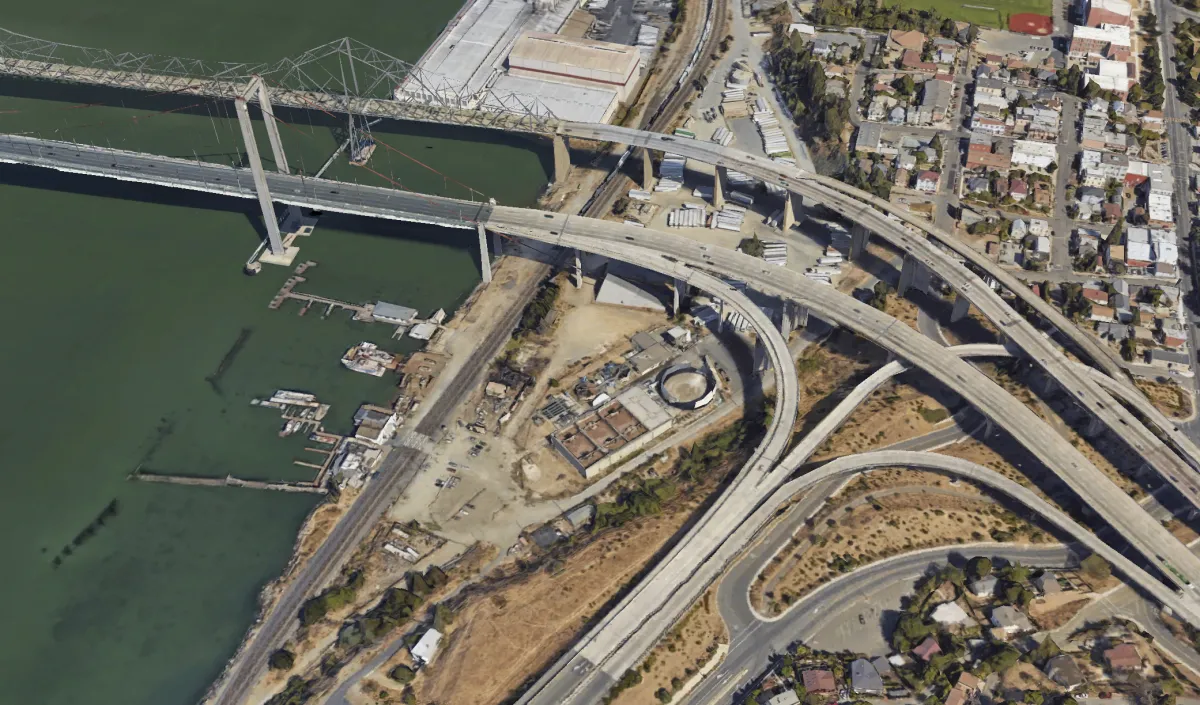
Wastewater Violations: Historic and ongoing concerns exist regarding unauthorized discharges of highly alkaline and sugary wastewater into the Carquinez Strait, affecting local aquatic life.
Environmental Science & Engineering: C&H Sugar to pay $734K over equipment failure that led to odour, wastewater violations in California
CBS News: EPA accuses C&H of violating Clean Water Act over sugar discharges into Carquinez Strait

Residents of the small Contra Costa County community have been exposed for more than a month to a putrid odor presumably caused by the release of hydrogen sulfide from the malfunctioning Crockett wastewater treatment plant. Some say they've experienced migraines, nausea and other symptoms.
Reclaiming the Strait: Our New Narrative
The Carquinez Strait does not belong to global corporations; it belongs to the people who live here.
For decades, community activism has defined our response. Citizens from Rodeo, Crockett, and Port Costa have organized, petitioned, and sued to hold industry accountable, successfully demanding better air monitoring and advocating for stricter safety protocols.
Today, Karkin Commons is the next evolution of this resistance. We are building a model of resilience that shifts from extraction and exploitation to stewardship and regeneration.
Future Vision: Karkin Commons and Community Resilience
We are moving past a future dictated by refinery flaring and sugar production toward a decentralized, local economy focused on mutual care.
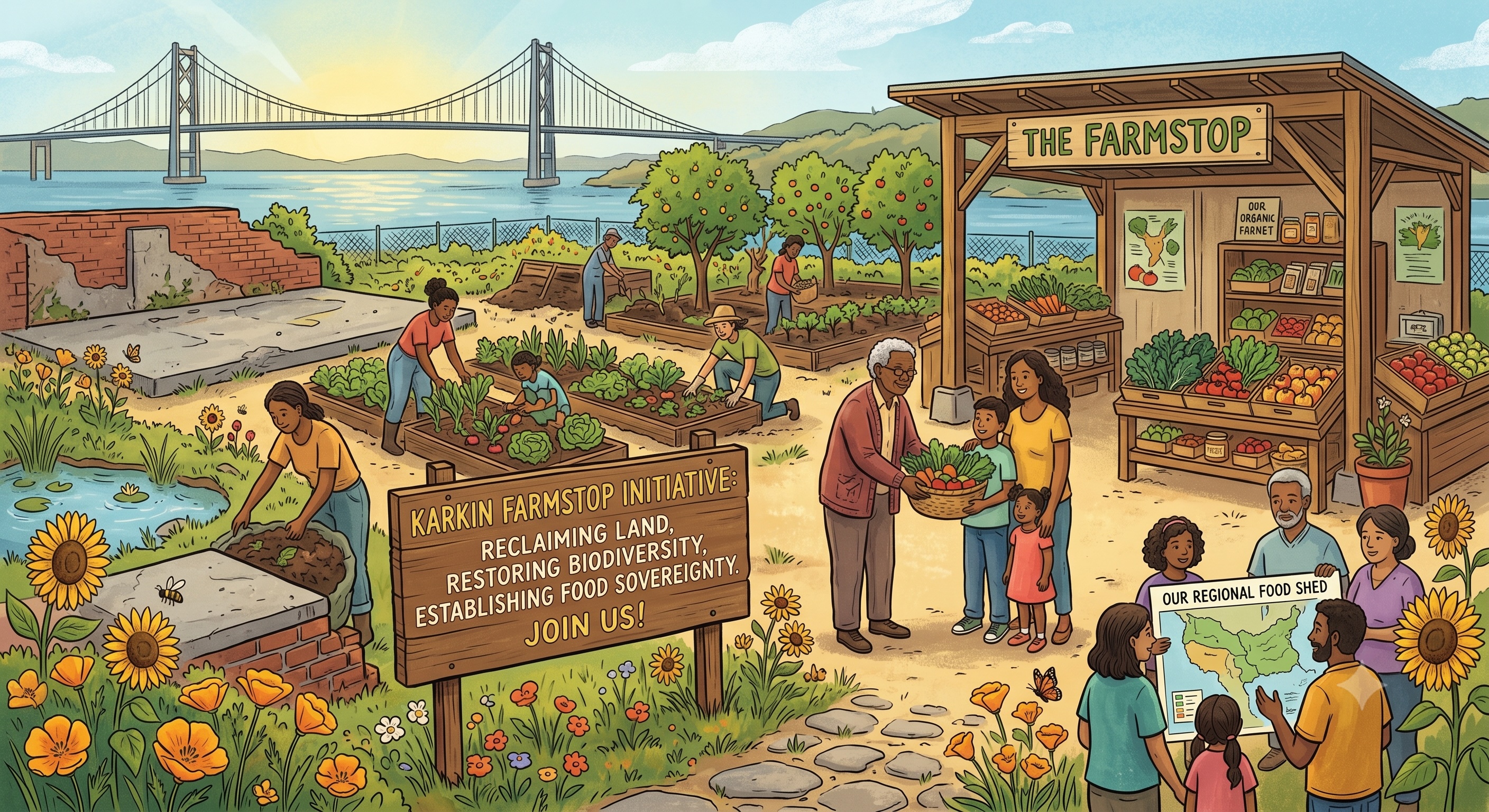
Karkin Farmstop Initiative: Reclaiming land for regenerative farming, restoring biodiversity, and establishing food sovereignty to ensure everyone has access to healthy, locally grown food.
Farm stops: Understanding a new model for local food distribution
Disaster-Resilient Health Hub: Creating community-led healthcare infrastructure capable of responding to both daily needs and emergencies, independent of extractive corporate control.
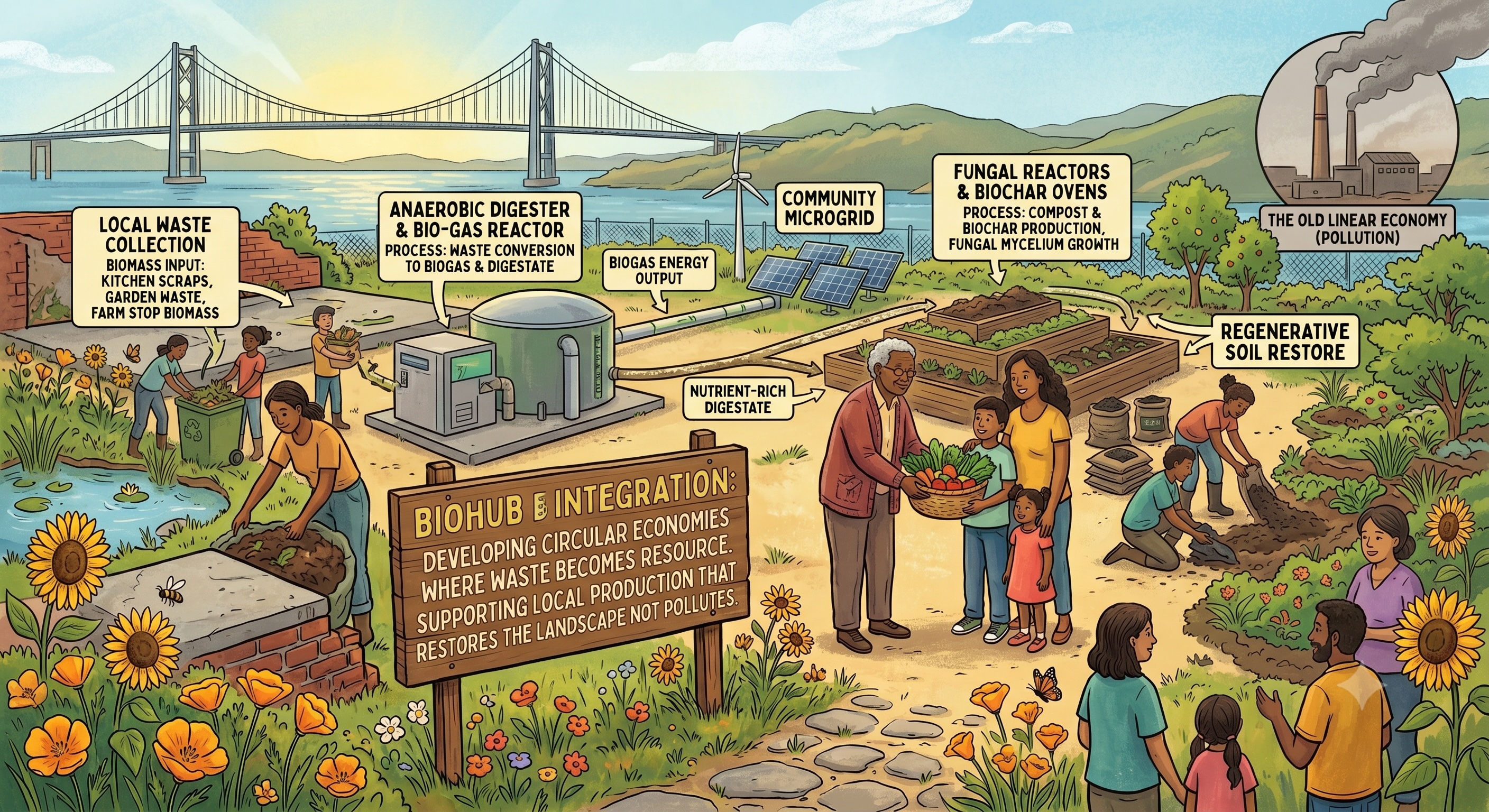
BioHub Integration: Developing circular economies where waste becomes resource, supporting localized production that restores the landscape rather than polluting it.